The ATS Isn't Rejecting You. A Tired Human Is.
Thirty applications, thirty instant rejections, and you're blaming software when the real problem is when and how you apply.
By Mattie · · 4 min read
You sent thirty applications. You got thirty rejections, or worse, thirty silences. So you decided the system must be rigged against you, and you went looking for a way to beat the software.
Here’s the thing - in my experience, what sinks most resumes isn’t a filter. It’s a person with a long list, a short attention span and a hiring manager waiting on a shortlist.
Diagnose before you fix
"No callbacks" and "interviews but no offers" are two different problems. Most people treat the wrong one.
- Zero callbacks: a resume and timing problem. Fix the page and how early you apply.
- Interviews, no offers: an interview problem. A better resume will not help you here.
Pick the right diagnosis first, or you will spend weeks polishing the wrong thing.
A quick test: if you have sent plenty of applications and nobody has even booked a screening call, look at your resume and your timing. If you are getting calls and stalling later, leave the resume alone and practice your interviews.
How a recruiter actually reviews a stack
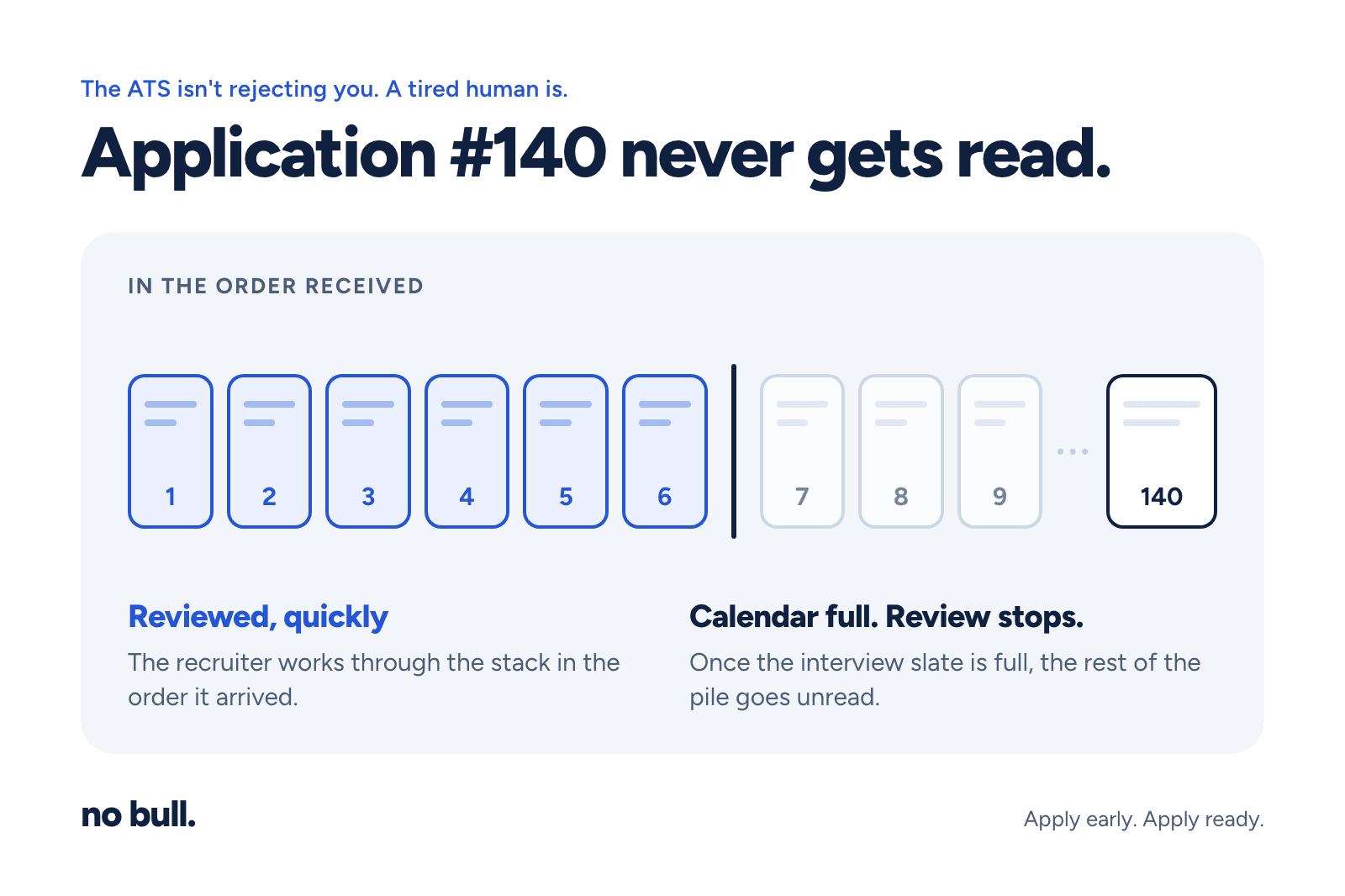
Here is what really happens. Applications come in. The recruiter often works through them in the order they arrived, quickly. Once there are enough qualified people to fill the hiring manager's calendar, the review often stops.
That means being application number 140 is a bigger risk than any software. You could have the best resume in the pile and never get read.
The ATS reality check
Most applicant tracking systems store your application and let recruiters sort and search. They are filing cabinets, not executioners. The fear of a hidden rejection machine is mostly kept alive by people who want to sell you a resume service.
Does that mean the words in a posting never matter? No. We will get to where they do.
Speed without sloppiness
You cannot tailor from scratch for every single job and also apply the day it posts. It’s exhausting. So do not.
- Build one clean resume per job family. If you target two kinds of roles, you need two resumes.
- Keep each one ready to send, saved as a PDF, with the file name already sorted out.
- Set up job alerts so you see new postings quickly.
- When a role you want appears, check the match, make small edits, and apply the same day.
Tailor once per family, not once per job. That is how you get early and stay accurate.
What the skim catches
Your first six seconds on the page decide whether the recruiter keeps reading. These are the things that get a resume dropped:
- Cluttered layout. If I cannot find your title and your last two roles at a glance, I move on.
- Promotions/Role changes within the same company. A lot of people make this formatting mistake: Don’t add each promotion or role change as a new job. A recruiter who looks at it for six seconds could make the mistake of thinking you’re jumping around companies. Instead, add the company and the master dates at the top, then list your individual titles, dates and detail underneath so it looks like “sub jobs”. That way, it’s clear how long you’ve been at one company.
- No numbers. Where you can honestly measure the result of your work, do it. Where you cannot, describe the outcome plainly.
- Education. Unless you’re a professional applying to jobs that specifically need your qualifications, or someone who has just graduated, your education should be near the bottom of your resume. It’s irrelevant, and just stops the recruiter from getting to the most important sections.
- Duty lists instead of outcomes. "Responsible for" tells me what the job was. I want to know what you changed.
- Overqualified noise. A founder or CEO line on an individual-contributor application makes a recruiter wonder if you will stay. Frame it so it supports the role you are applying for.
Read your top third like a stranger. Does it prove you can do this job?
Knockout questions and mirrored language
Where the posting's words do matter: knockout questions. Work authorization, required licenses, location, minimum experience. Answer them honestly and carefully, because a wrong click can end the application.
Mirroring the posting's language also helps a human skimmer see the match. Use the terms that truly describe your work. Do not stuff in skills you do not have. A real person will ask about them in the interview.
Remote roles raise the stakes
Remote postings draw the biggest, most crowded pools. If you only apply to remote jobs, your timing and your fit have to be tighter than everyone else's. Apply earlier, tailor your top third harder, and widen your search to include hybrid roles.
Your next step
Pick your two most likely job families. Build one clean resume for each. Set your alerts. Then apply the day roles post.
You were never fighting a machine. You were fighting a stack, and the stack rewards the people who show up first with a page that proves they can do the work.